
Emergency Drainage Engineer Paddock Wood
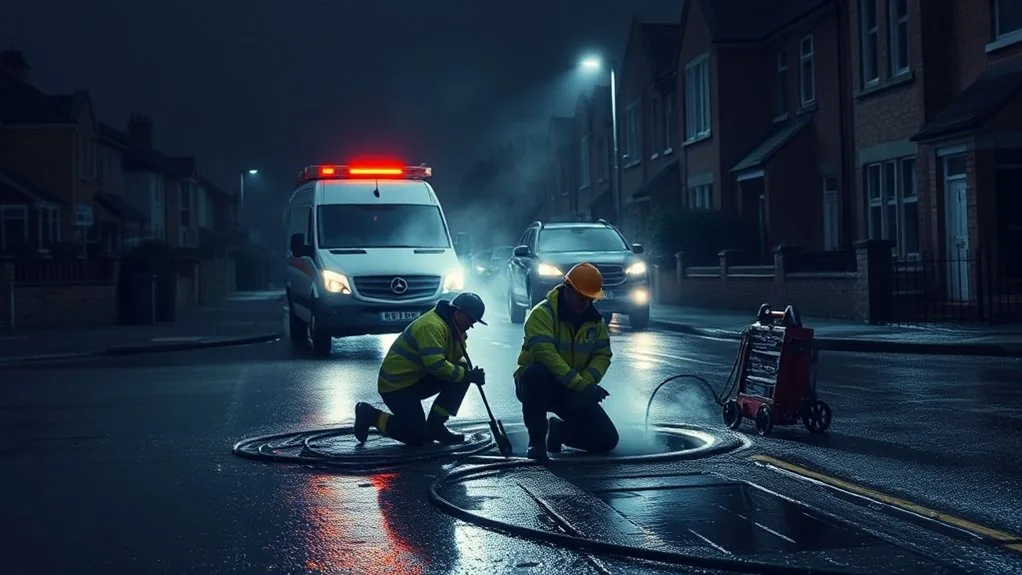
Blocked drains can cause serious disruption and damage if not dealt with quickly. Our skilled engineers use CCTV diagnostics and high-pressure water jetting to clear blockages safely and efficiently.
We typically arrive within 60–90 minutes across Paddock Wood. For a fast quote or emergency callout, please contact us immediately.
When drains back up without warning and normal clearing methods fail, emergency drain unblocking is the rapid-response service that restores flow and prevents structural or hygiene-related damage. You’re dealing with a time-critical intervention, not routine maintenance. Technicians use diagnostic tools—CCTV drain surveys, acoustic listening devices, and pressure testing—to locate blockages accurately in modern and historical plumbing.
They then apply high-pressure water jetting, mechanical cutting heads, or root removal systems, chosen to protect pipe integrity and reduce environmental impact. Waste material is contained, extracted, and disposed of under regulatory controls, preventing contamination of soil and waterways. In Paddock Wood, this service operates 24/7, so you’re not left managing rising effluent, compromised foundations, or service disruptions while waiting for standard appointments.
When your fixtures start draining slowly, your pipes produce gurgling noises, or you notice persistent bad odours from sinks or toilets, your drainage system’s under abnormal stress and may be close to failure. These are critical indicators of partial obstructions, air displacement, and bacterial build‑up within your pipework. If you’re also experiencing repeated toilet blockages, you need urgent emergency drain unblocking in Paddock Wood to prevent a full system backup and potential property damage.
How long have your sinks, showers, or toilets been taking to clear? When wastewater lingers, it’s a strong indicator of partial blockage, scale buildup, or structural defects within your internal or external pipework. In Paddock Wood’s mixed clay soils and older housing stock, slow draining fixtures often mean root ingress, collapsed sections, or fat and soap accumulation that will rapidly deteriorate into a full blockage.
You shouldn’t ignore gradual slowing. It increases backflow risk and can compromise hygiene, especially where rainwater management systems connect to foul drains. Poorly protected pipe insulation can also let fats congeal faster in colder pipe runs, restricting flow. If plunging or basic cleaning doesn’t restore normal discharge within minutes, you need an emergency visit before restricted flow becomes total failure.
Although it can seem minor at first, a persistent gurgling noise from sinks, baths, showers, or toilets is a red‑flag symptom of air being displaced through a partially blocked or poorly vented drain. That sound indicates unstable water pressure and interrupted flow within the pipework, often due to accumulating debris narrowing the bore.
If you ignore it, the restriction can rapidly progress to a full blockage, backflow, or joint failure. Effective pipe maintenance means treating gurgling as an early‑warning signal, not background noise. You shouldn’t attempt aggressive DIY fixes, as they can compact the obstruction or damage seals. Instead, call a 24/7 emergency team in Paddock Wood to survey the line, restore correct water pressure, and stabilise the system before it fails.
Ever noticed a sour, sewage‑like smell lingering around your sink, shower, or outside drains that just won’t clear? That odour usually indicates anaerobic bacterial activity and decomposing organic matter trapped in your pipework, gully, or interceptor. It’s more than unpleasant – it’s a sign that waste isn’t being transported efficiently and that gases are back‑venting into your property.
If the smell intensifies after heavy rain, garden maintenance, or high water usage, you may have partially collapsed pipes, root ingress, or a failing trap seal. Ignoring it risks structural damage, contamination of surrounding soil, and poor indoor air quality. Rapid, professional jetting and CCTV inspection restore proper flow, protect your health, and support water conservation by preventing leaks and unnecessary re‑flushing.
Persistent foul odours are often the first warning, but repeated toilet blockages are the point at which your drainage system is actively failing and needs emergency attention. If you’re plunging the same toilet more than occasionally, you’re likely dealing with partial obstructions, scale buildup, or a structural defect in the pipework.
Frequent blockages compromise toilet hygiene, forcing contaminated water to linger in the bowl and increasing the risk of overflow and cross-contamination. They can also indicate root ingress, collapsed pipe sections, or misaligned joints that won’t respond to DIY fixes.
Prompt emergency intervention protects your property and supports long-term plumbing maintenance. Using specialist equipment, a 24/7 Paddock Wood engineer can locate the restriction, clear it safely, and advise on preventing recurrence.
Many emergency drain blockages in Paddock Wood can be traced to a handful of predictable causes, and understanding them helps you respond fast and avoid repeat failures. In domestic systems, the most frequent trigger is a gradual build‑up of fats, oils, and food residues in kitchen pipework. In bathrooms, wipes, sanitary products, and excessive toilet tissue create dense obstructions that standard plunging won’t shift. External drains often fail due to root intrusion and silt accumulation, especially where Drain maintenance and Pipe inspection have been irregular.
You’ll typically notice:
When you call us out in an emergency, we immediately assess the fault using structured diagnosis and CCTV inspection so there’s no guesswork. Based on what we see in your drains, we’ll select the most effective method—high-pressure jetting, rodding, or mechanical clearance—to restore flow fast while protecting the pipework. If we identify structural defects, we’ll explain whether a targeted repair or trenchless relining is required to secure the system long-term.
Although every emergency call-out is different, our process always starts with rapid, accurate diagnosis using advanced CCTV drain inspection equipment. As soon as we arrive, we assess access points, system layout, and risk to your property, then feed a high-resolution camera through the affected line.
Using cutting-edge CCTV technology, we can see real-time images of cracks, root ingress, collapsed sections, fat build-up, and hidden obstructions. This lets us distinguish between structural failure and simple blockage within minutes, so you’re not paying for guesswork or unnecessary disruption.
You’ll get a clear explanation of what’s happening underground, along with recorded footage if required. This detailed diagnosis also supports long-term drain maintenance planning, helping you prevent repeat emergencies and protect your Paddock Wood property.
Once the CCTV inspection pinpoints the blockage, high-pressure water jetting is typically our fastest and most effective method to restore flow. We deploy a specialist jetting unit that forces water through reinforced hoses at high pressure, directed via a precision nozzle tailored to your pipe size and material.
This process breaks down grease, scale, silt, and intrusive debris, flushing it safely through the system without harsh chemicals. You get thorough pipe cleaning along the full internal diameter, not just a small cleared channel.
Because it’s non-invasive, there’s minimal risk to sound pipework when handled by trained technicians. We monitor pressure levels and flow rates continuously, adjusting in real time so your drains are cleared quickly, safely, and kept operational for longer.
In emergencies where jetting isn’t suitable or a blockage is dense and compacted, we turn to rodding and mechanical clearance to restore flow fast. We deploy rigid or flexible rods fitted with specialized heads to punch through obstructions, break up debris, and physically retrieve lodged materials from your line.
Using mechanical clearance equipment, we apply controlled rotary force to tackle heavy silt, wipes, fat deposits, and root intrusions without overloading fragile pipework. This targeted method restores hydraulic capacity quickly, minimizing backup and overflow risk.
Once flow’s re‑established, we carry out focused pipe inspection to verify the line is clear and free from residual choke points, supporting ongoing drain maintenance and reducing the likelihood of repeat emergency blockages.
When drain damage’s too advanced for clearing alone to be safe or reliable, we move rapidly from unblocking to permanent repair or trenchless relining. After urgent drain cleaning, we carry out high‑definition CCTV pipe inspection to confirm cracks, displaced joints, or root ingress. You’ll see clear evidence before we proceed.
| Issue Detected | Recommended Action | Typical Outcome |
|---|---|---|
| Localised crack | Patch repair / lining | Restored structural integrity |
| Multiple fractures | Full-length relining | Long-term leak and root barrier |
| Pipe collapse | Sectional excavation | Full flow restored |
Where structure’s intact, cured‑in‑place lining creates a seamless, corrosion‑resistant pipe with minimal digging, ideal for drives, gardens, and busy commercial sites across Paddock Wood. If collapse risks flooding or foul backup, we’ll mobilise excavation teams immediately, prioritising safety and downtime reduction.
Because blocked drains can escalate fast, our emergency team is on-call across Paddock Wood to reach you as quickly as possible, typically within an hour depending on location and traffic conditions. You get a rapid, structured response, whether you’re in a town centre flat, rural cottage, or commercial unit.
Once dispatched, our technicians use GPS routing to minimise delays and arrive with fully stocked vans carrying advanced plumbing tools, CCTV survey units, and high-pressure jetting systems. We’re prepared for external blockages caused by failed garden maintenance, root ingress, or silted gullies, as well as internal pipe failures.
You’re kept updated by phone, given accurate ETAs, and on arrival we move straight into diagnostics, isolating the issue and restoring flow with minimal disruption.
Although every blocked drain feels like an emergency, responsibility for fixing it depends on exactly where the fault sits in the system. If the blockage is within the private pipework serving only your property, you’re responsible for arranging and funding emergency drain unblocking. That includes internal pipe runs and the section up to the point where it becomes a shared or public sewer.
Once the pipework joins a shared drain or a public sewer, the statutory water and sewerage company normally takes over. They must act quickly to protect public health, comply with environmental regulations, and limit pollution. As the property owner, you’re still responsible for prompt reporting, safe access, and supporting water conservation by avoiding misuse of your drainage system.
Instead of waiting for another costly flood or foul smell, you can dramatically cut the risk of emergency drain unblocking by adopting a few targeted, technical habits now. Start with structured drain maintenance: schedule periodic mechanical cleaning of traps, gullies, and accessible pipework, and keep a log of dates, methods, and findings. Combine this with planned CCTV pipe inspections to detect root ingress, scale, and misaligned joints before they trigger a crisis.
Use your senses and act on early warning signs:
Early intervention turns emergencies into routine maintenance.
When a drain emergency in Paddock Wood can’t wait, you need a team that combines rapid response with engineering‑level diagnosis and repair. You get a 24/7 on‑call crew that arrives fast, with high‑pressure jetting units, rotary cutting heads, and thermal imaging where required, so blockages are removed before they escalate into structural damage.
Our technicians don’t just clear the immediate fault; they carry out targeted pipe inspection using HD CCTV systems to identify cracks, root ingress, and hidden defects. That means you’ll know exactly what failed and why.
We also advise on precise drain maintenance schedules tailored to your pipe materials, gradients, and load, helping you reduce repeat emergencies, protect your foundations, and keep your Paddock Wood property fully operational under peak demand.
When a drain’s backing up, you need clear answers fast about response times, costs, and what you can safely attempt yourself. Below, you’ll find precise guidance on how quickly we can reach you anywhere in Paddock Wood, how pricing works in emergencies, and whether your postcode’s within our immediate coverage zone. Use these FAQs to make informed, safe decisions while we’re on our way.
Although every property and blockage is different, our emergency drain unblocking teams in Paddock Wood are typically on-site within 60–90 minutes, 24/7, subject to traffic and call volume. You’ll speak to a trained coordinator who triages your issue, prioritising critical risks like sewage backflow, flooding, or loss of facilities.
We use GPS-dispatched engineers, pre-loaded vans, and high-pressure jetting units so we can start work the moment we arrive. You’ll get clear Plumbing tips to stabilise the situation while we’re en route and Drain maintenance advice once your system’s restored.
| Scenario | Typical Response Time | Notes |
|---|---|---|
| Sewage backing up | 60–90 mins | Highest priority |
| External drain flooding | 60–90 mins | Weather and access dependent |
| Slow but functional drain | Same day | Scheduled around emergencies |
| Recurrent blockages | 24 hours | Includes diagnostic CCTV survey |
| Planned maintenance | Agreed in advance | Preventative service slots |
Rapid response is only half the story in an emergency; you also need clear, upfront costs. You’ll typically face a fixed call‑out fee plus labour, calculated by the hour, with surcharges for night or weekend attendance. Before work starts, you should get a written estimate based on access, pipe material, blockage severity, and property type.
Prices increase if advanced methods are needed, such as high‑pressure water jetting or mechanical cutting of roots and debris. A CCTV pipe inspection may be recommended to pinpoint structural defects, which can add to the initial bill but prevents repeat failures.
Many providers reduce long‑term costs by advising a drain maintenance schedule after the emergency visit, helping you avoid further disruptions and expensive repeat call‑outs.
Unsure whether you should tackle a blocked drain yourself before calling an emergency engineer? You can attempt minor issues, but you must act quickly and follow strict safety precautions. Start with simple DIY tips: use a plunger on sinks or toilets, pour hot (not boiling) water and a mild detergent down greasy kitchen wastes, and remove visible hair or debris from plugholes using gloves.
Don’t use makeshift rods, metal hangers, or excessive force; you risk damaging pipework or dislodging seals. Avoid mixing chemical drain cleaners, as they can generate toxic fumes and heat. If you notice sewage backing up, repeated gurgling, strong foul odours, or water rising in multiple fixtures, stop all DIY immediately. At that point, you need urgent professional intervention.
In most emergency callouts across Paddock Wood, we can reach you fast—whether you’re in a town centre, a rural village, or on a commercial estate. Our engineers are strategically based to minimise travel time and restore flow before damage escalates.
You’re covered across Medway, Maidstone, Canterbury, Ashford, Tonbridge and Malling, Tunbridge Wells, Dartford, Gravesham, Swale, Shepway, Thanet, and surrounding areas. If your postcode’s in Paddock Wood, assume we can attend—then call to confirm live availability.
Because blocked drains escalate quickly, we treat every job as time‑critical. Our local plumbing teams carry high‑pressure jetting units, CCTV survey systems, and mechanical cutters on their vans, so most issues are resolved on the first visit, with follow‑up drain maintenance scheduled if required.
Yes, we offer discreet emergency drain services for commercial premises at night. We use unmarked vehicles, low-noise equipment, and minimal lighting to avoid drawing attention. Our engineers work with your on-site team to access and clear affected drains using CCTV diagnostics and high-pressure water jetting.
Yes, emergency drain unblocking can help with recurring bad odours even without visible blockage. Engineers use CCTV surveys, trap and vent checks, and high-pressure jetting to identify and remove the source of the smell. This process helps protect pipe integrity, reduce biofilm build-up, and lower health risks.
Yes, drainage engineers are trained to work safely around pets and children. They carry out site risk assessments and follow procedures to secure tools, chemicals, and access covers. They maintain controlled zones, use PPE, and ensure the area is safe, sanitised, and systems are checked before leaving.
Yes, you will receive before-and-after drain camera footage for your insurance claim. The footage will clearly show the blockage, the work completed, and the restored flow, all with timestamps. We will provide the files and written notes in a format suitable for insurance assessors and can send them urgently if required.
Yes, we offer temporary solutions if a full repair is not immediately possible. Engineers can apply emergency patches, install over-pumping systems, and fit temporary seals or liners to manage damage. You will receive a technical assessment on-site with risks explained and priorities identified to protect your property until permanent repairs can be carried out.
Although a blocked drain can escalate quickly into flooding, contamination, and structural damage, you can get it under control today with a targeted emergency response. By calling now, you’ll get rapid fault-finding, high‑pressure jetting, and safe waste removal that stabilises your property and minimises Environmental impact. Technicians isolate the fault, protect critical assets, and restore flow fast.
| Issue | Technical Action | Outcome |
|---|---|---|
| Sewage backing up | CCTV survey, jetting, disinfection | Hygienic, free‑flowing system |
| Surface water flooding | Gully clearing, root cutting | Rapid drainage restoration |
| Recurrent blockages | Drain maintenance scheduling | Fewer emergencies, longer life |
| Odours / slow drains | Trap inspection, descaling | Stable, reliable performance |
You’ll get documented findings and clear next steps to prevent repeat failures.